
Disclaimer: What I’m about to share may not be popular, but I believe it’s worth wrestling with.
Lately, I’ve been doing a lot of reading, praying, and re-evaluating some things in my life. I tend to do this when I feel discouraged or disillusioned. One of the ways I process is by doing a spiritual “pulse check”—a kind of relationship maintenance between me, God, and others. When I sense the temperature is off, I know I need to pray, meditate on Scripture, and realign my compass with the Lord.
Recently, my heart has been burdened with how we, as a society and even as the church, treat “the least of these.” As someone who has often felt like a misfit, I can relate to those who don’t quite fit in at church. Too often, these people get overlooked, ignored, and slip through the cracks.
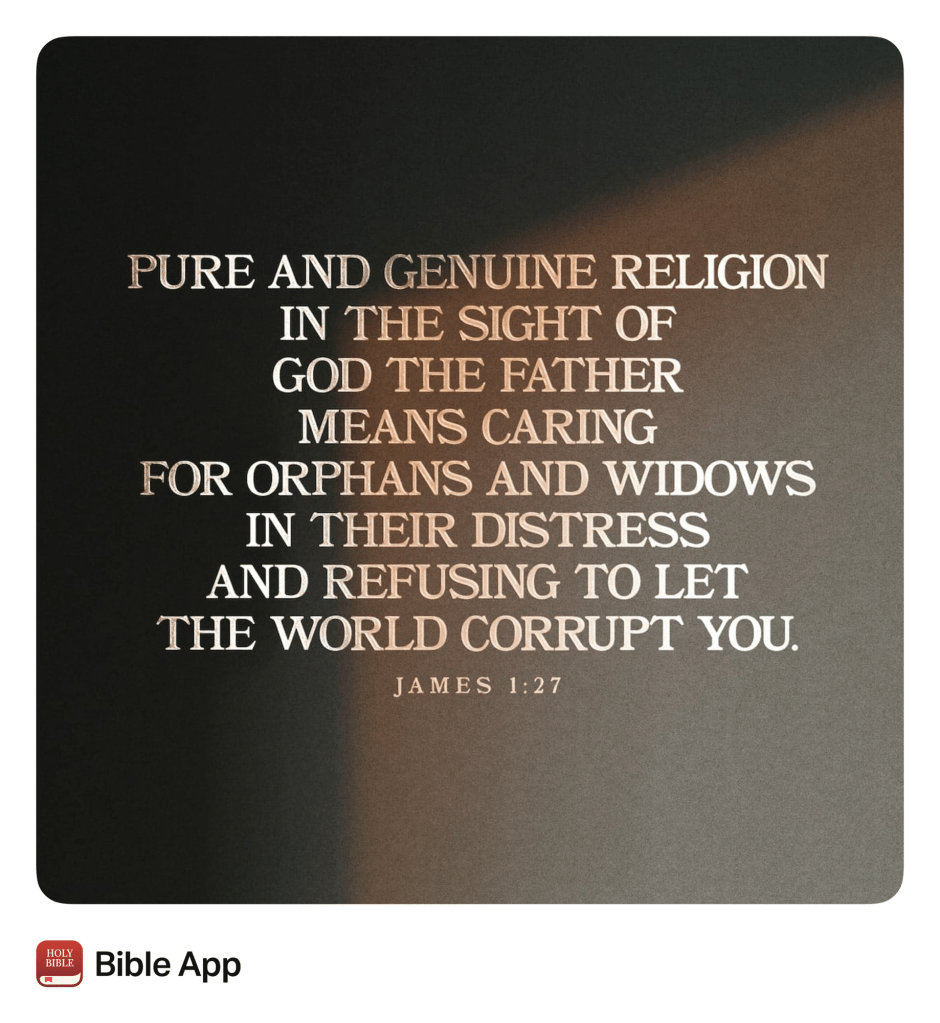
The Lord reminded me of James 1:27:
“Religion that is pure and undefiled before God the Father is this: to visit orphans and widows in their affliction, and to keep oneself unstained from the world.”
It’s not a new idea—Zechariah 7:10 echoes it as well:
“Do not oppress the widow, the fatherless, the sojourner, or the poor, and let none of you devise evil against another in your heart.”
When Scripture speaks of widows and orphans, it is pointing us to those most vulnerable, those with no safety net, those the world forgets. It’s not just about family status—it’s about every soul who feels abandoned, unseen, and without hope.
And yet, I lament that in many ways the modern church has drifted into becoming more like a social club than an infirmary. Instead of being a hospital for the hurting, we sometimes become a place where only the well-polished and well-connected feel welcome. But Jesus did not come for the healthy—He came for the sick, the broken, and the outcast.
The question we each need to ask is this: Who are the widows and orphans around me? They may be the single parent struggling silently, the newcomer sitting alone, the teenager battling depression, or the quiet soul who feels invisible.
Pure religion calls us not to overlook them, but to see them, to step into their affliction, and to love them with the love of Christ.
So let’s return to the heart of God—where His church is not a club, but a lifeline. May we open our eyes, open our arms, and open our hearts to those who need Him most.
 TMDPB - The Modern Day Parables Blog